Description
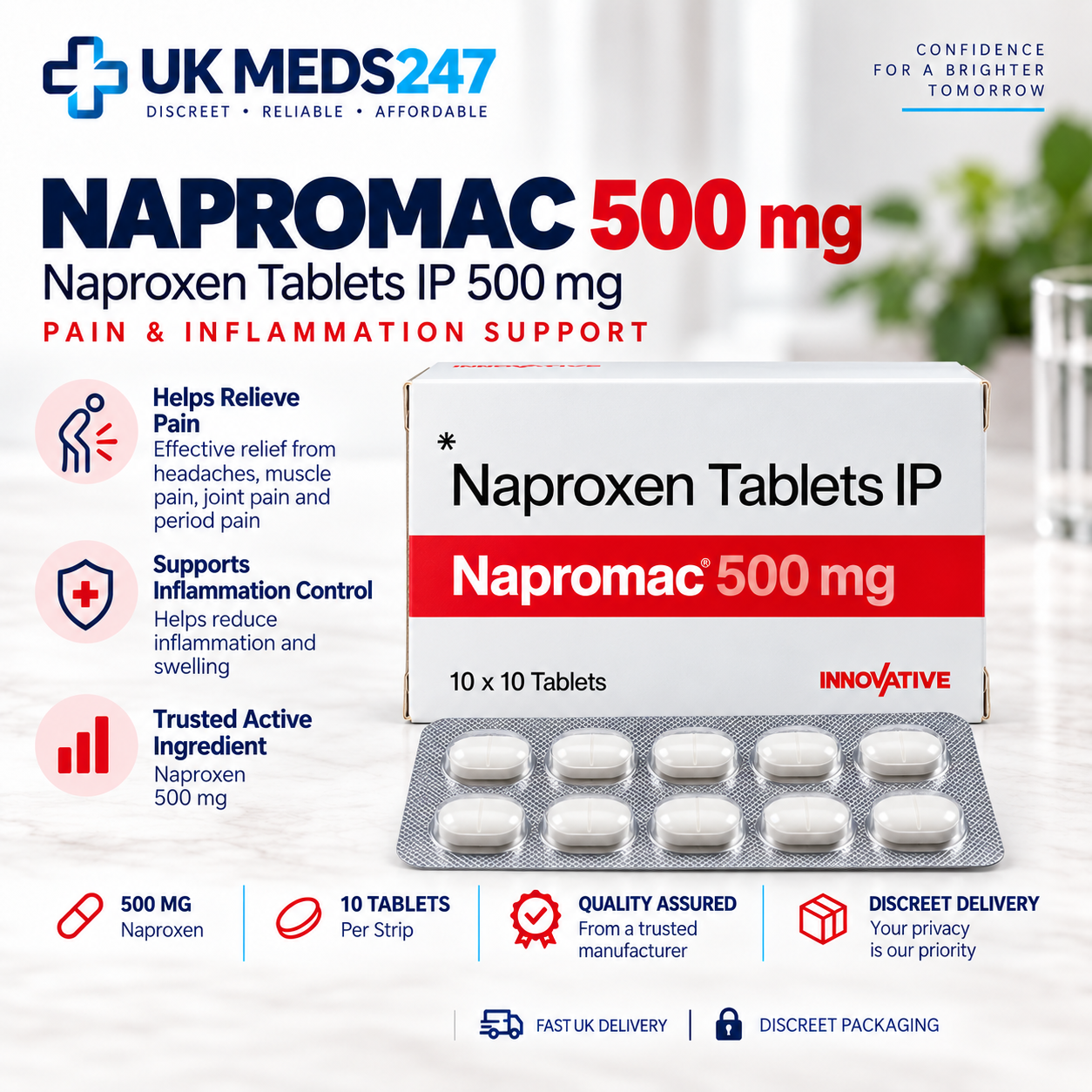
Naproxen reduces the production of prostaglandins, substances involved in pain and inflammation. It can relieve symptoms but does not cure the underlying condition. This information covers standard oral tablets; gastro-resistant formulations require their own instructions.
What it is used for
UK-authorised uses include rheumatoid arthritis, osteoarthritis, ankylosing spondylitis, acute gout, acute musculoskeletal disorders and period pain.
Side effects
Reported effects include indigestion, heartburn, stomach discomfort, nausea, headache and dizziness.
Stop taking naproxen and seek urgent medical help for vomiting blood, black stools, severe abdominal pain, chest pain, breathing difficulties or a blistering rash. These can indicate serious bleeding, cardiovascular problems or an allergic reaction.
Naproxen is unsuitable for people with certain stomach ulcers or bleeding histories, severe heart, kidney or liver failure, or previous allergic reactions to NSAIDs. It must not be used in the final three months of pregnancy. Avoid combining it with ibuprofen or other NSAIDs; anticoagulants and several other medicines require an interaction check. This list is not exhaustive.
Recommended dosage
For arthritis, the reference adult dose is 500–1,000 mg daily, taken once daily or in two divided doses. Other indications require different regimens. Take with or after food and use the lowest effective dose for the shortest necessary time. Follow the prescribed dose and supplied leaflet.
Storage guidelines
Store in a cool, dark place. Keep out of children’s sight and reach and do not use after expiry.